
Mapping Transaction Pathways to Strategic Advantages in Mobile-Based Interactive Entertainment Systems
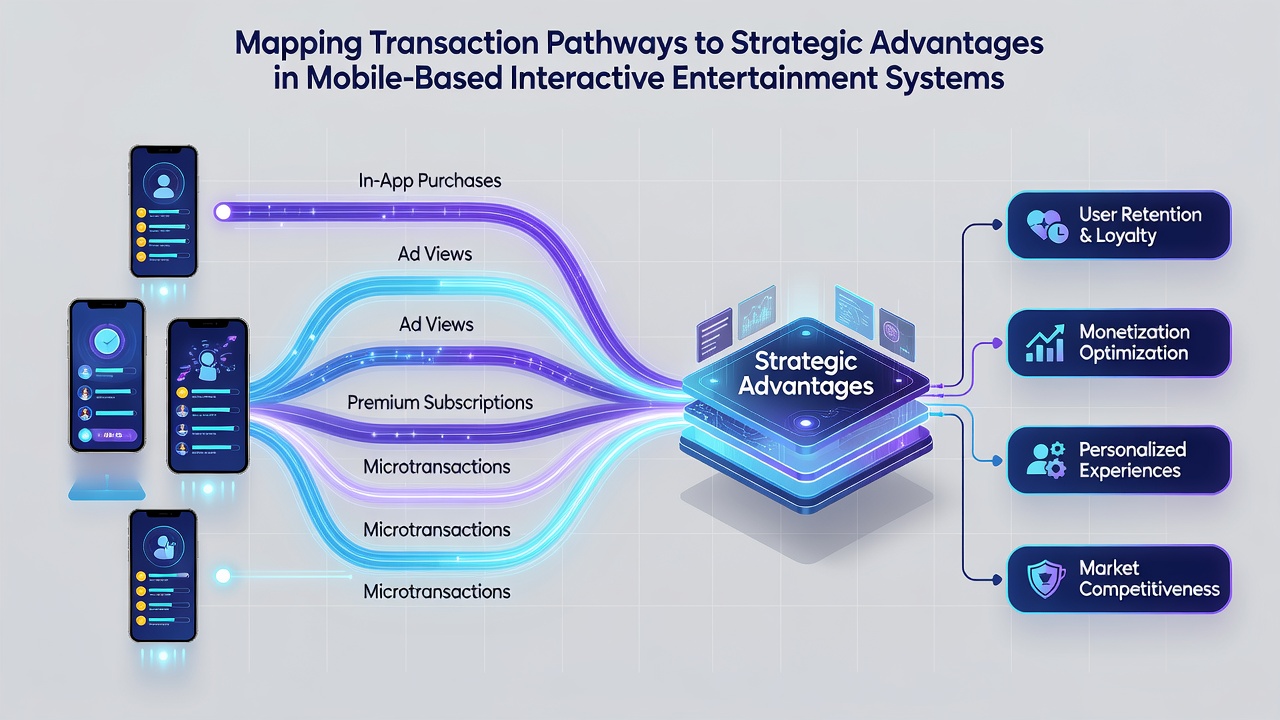
Transaction pathways in mobile-based interactive entertainment systems represent the sequences of financial exchanges that occur between users and platforms during gameplay sessions, in-app purchases, and reward redemptions, and data shows these sequences often determine operational efficiency across global markets. Researchers at institutions like the University of Melbourne have documented how these pathways integrate payment gateways with user behavior logs, creating datasets that companies analyze to refine service delivery while complying with regional regulations. Observers note that platforms in North America and Asia Pacific regions have adopted standardized mapping protocols since 2024, which allow for real-time tracking of funds moving through digital wallets, subscription tiers, and promotional credits.
Core Components of Transaction Pathway Mapping
Mapping begins with identification of entry points such as credit card authorizations, cryptocurrency transfers, and carrier billing integrations, after which analysts trace each step through authentication servers, fraud detection layers, and settlement systems. Experts from the Canadian Gaming Association have outlined methods where blockchain ledgers record these steps to reduce discrepancies, while studies from the European Commission indicate that such records improve reconciliation accuracy by up to 18 percent in tested mobile environments. The process incorporates device-specific variables including operating system version, network latency, and geographic location data, which together produce heat maps that highlight bottlenecks in high-traffic periods.
Additional layers involve categorization of transaction types, ranging from micro-payments under one dollar to larger seasonal bundles, and platforms apply algorithmic segmentation to isolate patterns that correlate with user retention metrics. Those who've examined datasets from major operators report that synchronized mapping across multiple regions helps align compliance requirements from bodies like the Australian Communications and Media Authority with internal revenue goals.
Strategic Advantages Derived from Detailed Mapping
Companies gain visibility into cost structures when pathways are fully charted, since each node reveals processing fees, currency conversion rates, and tax obligations that accumulate across borders. Evidence from industry reports compiled in early 2025 reveals that operators who implemented comprehensive mapping reduced average transaction failure rates from 4.2 percent to 1.9 percent within six months, primarily through targeted adjustments at the authentication stage. This visibility also supports dynamic pricing models where promotional offers adjust automatically based on pathway performance during peak usage windows.
Security enhancements follow naturally from pathway documentation because anomalies become easier to flag when baseline flows are established. Regulatory filings submitted to oversight agencies in multiple jurisdictions demonstrate that mapped systems allow quicker response to suspected irregularities, which in turn maintains platform certifications required for continued operation. What's interesting is how these same maps feed into partnership negotiations, since third-party payment providers receive clear data on volume and reliability before contract renewals.
Implementation Across Mobile Platforms in 2026
By July 2026 several operators plan phased rollouts of updated mapping software that incorporates artificial intelligence modules capable of predicting pathway disruptions caused by regulatory changes or network outages. Figures released by the Japan Casino Regulatory Commission indicate that mobile entertainment segments in the Asia Pacific region processed over 2.3 billion transactions in the preceding fiscal year, underscoring the scale at which these systems must operate without interruption. Integration with device-native security features such as biometric verification and tokenization further strengthens the mapped routes against interception attempts.
Cross-platform compatibility remains a focal point because users frequently switch between smartphones, tablets, and wearable devices during single sessions, and pathway maps must account for session handoffs that preserve transaction continuity. Data compiled by academic teams at the National University of Singapore shows that seamless handoff protocols reduce user drop-off rates during payment stages by measurable margins, which directly influences lifetime value calculations used in strategic planning.
Challenges and Ongoing Adjustments
Even with advanced mapping tools, latency variations across 5G and legacy networks introduce variables that require continuous recalibration, and operators address these through periodic audits that compare predicted versus actual flow times. Currency volatility in emerging markets adds another dimension, prompting some platforms to maintain parallel pathway models that isolate high-risk regions until stabilization occurs. Those monitoring the sector note that collaboration between payment processors and entertainment developers has produced standardized APIs that streamline data exchange while preserving proprietary mapping methodologies.
Conclusion
Transaction pathway mapping continues to serve as a foundational element for operational strategy within mobile interactive entertainment systems, with documented benefits appearing in efficiency gains, security posture, and regulatory alignment across multiple jurisdictions. As platforms prepare for projected volume increases through 2026 and beyond, the practice of charting these routes provides measurable inputs for resource allocation and partnership development. Ongoing refinements driven by regulatory updates and technological shifts ensure that mapped systems remain responsive to evolving market conditions while supporting sustained platform functionality.