
Ledger Links in Live Tables: Tracing Secure Transfers Through Portable Dealer Engagements
Live dealer platforms have integrated ledger technology to record and verify transfers during sessions that rely on portable dealer setups, creating traceable pathways for funds moving between player accounts and game tables in real time. Observers note that these systems combine distributed ledger records with mobile dealer equipment, allowing operators to maintain continuous oversight even when dealers operate from temporary locations rather than fixed studios.
Core Mechanics of Ledger Integration
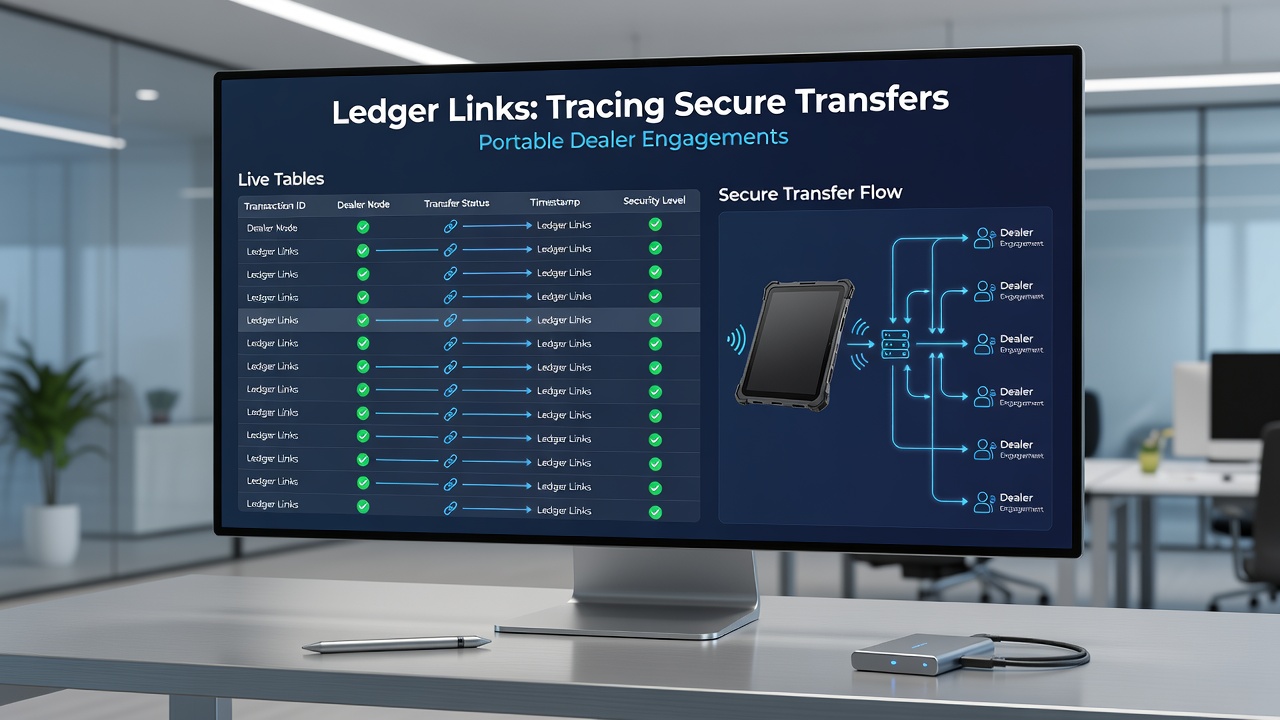
Portable dealer engagements depend on compact hardware kits that connect to central servers through encrypted channels, and ledger links attach timestamps plus cryptographic hashes to every transfer initiated during play. Researchers at institutions focused on digital transaction security have documented how each bet, payout, and balance adjustment receives a unique entry that links back to the originating player wallet without exposing full account details to the network. Data from multiple operators shows these entries update within milliseconds, enabling verification across distributed nodes while the dealer continues hosting tables on location.
Security Protocols in Mobile Environments
Operators deploying portable dealers in June 2026 have reported expanded use of multi-signature requirements on ledger entries, requiring confirmation from both the dealer device and the central platform before any transfer processes. This dual-check approach reduces single-point failures common in earlier mobile streaming setups. Industry reports indicate that transaction volumes processed through such linked systems reached notable levels during the first half of the year, with particular growth in regions where regulators require detailed audit trails for interactive table games.
Tracing Transfers Across Sessions
Each ledger link functions as a chain segment that records the sequence of actions from initial deposit through active play to final settlement. When a player joins a live table hosted by a portable dealer, the system generates an entry that captures the exact moment funds move into the table bank. Subsequent actions such as placing bets or receiving winnings append new segments that reference the prior hash, producing an unbroken record. Experts have observed that this structure supports rapid dispute resolution because any mismatch between the displayed table outcome and the ledger entry triggers an automated flag for review.
One study conducted by a European research consortium examined ledger performance across 12 operators using portable dealer kits and found average reconciliation times dropped by measurable margins compared with traditional centralized logging methods. The same analysis highlighted that cross-border sessions benefited particularly because ledger entries remain accessible to authorized parties regardless of physical server location.
Regulatory Alignment and Reporting
Regulators in several jurisdictions have begun accepting ledger exports as primary documentation for compliance audits involving live table activity. According to figures released by the Nevada Gaming Control Board, platforms that adopted linked ledger systems submitted complete transaction histories with fewer manual interventions during the reporting period ending in June 2026. Similar patterns appear in data shared by iGaming Ontario, where portable dealer operations must demonstrate verifiable fund movement records to maintain licensing standards.
Operators also reference guidelines from the European Gaming and Betting Association when configuring ledger parameters, ensuring that portable dealer transfers meet transparency thresholds without compromising session speed. These frameworks encourage the use of standardized data fields so that regulators across regions can interpret entries consistently.
Implementation Examples and Observed Patterns
Take one operator that introduced portable dealer tables at a temporary venue during a major sporting event in early 2026; the ledger system recorded over 180,000 individual transfers across two weeks with zero reported discrepancies in final settlements. Another deployment in the Asia-Pacific region linked dealer tablets directly to a permissioned blockchain layer, allowing on-site staff to verify player balances instantly while the central ledger maintained the master record. Those who've studied these deployments note that integration costs declined as hardware kits became more standardized, yet the requirement for trained personnel to manage node connectivity remained consistent.
What's interesting is how portable setups handle intermittent connectivity. When a dealer kit experiences brief signal loss, the local device buffers pending transfers and appends them to the ledger once reconnection occurs, preserving sequence integrity. Research indicates this buffering mechanism has reduced lost-transaction incidents across tested environments.
Future Considerations in Ledger Design
Developers continue refining consensus mechanisms used in these live table environments to accommodate higher volumes during peak portable dealer hours. Academic papers published through university gaming technology programs suggest that hybrid models combining permissioned chains with selective public verification could further strengthen audit capabilities without increasing latency. Observers point out that any expansion into new geographic markets will likely require adjustments to meet local data residency rules while keeping the core ledger link structure intact.
Conclusion
Ledger links have become a practical component of secure transfer management in live table environments that rely on portable dealer engagements. The combination of cryptographic chaining, real-time recording, and regulatory compatibility supports transparent operations across varying deployment conditions. Data collected through June 2026 and earlier periods demonstrates measurable improvements in reconciliation speed and audit readiness, while ongoing refinements address connectivity and scalability demands. As portable dealer technology matures, the ledger frameworks supporting it continue to evolve in line with operator requirements and oversight expectations.