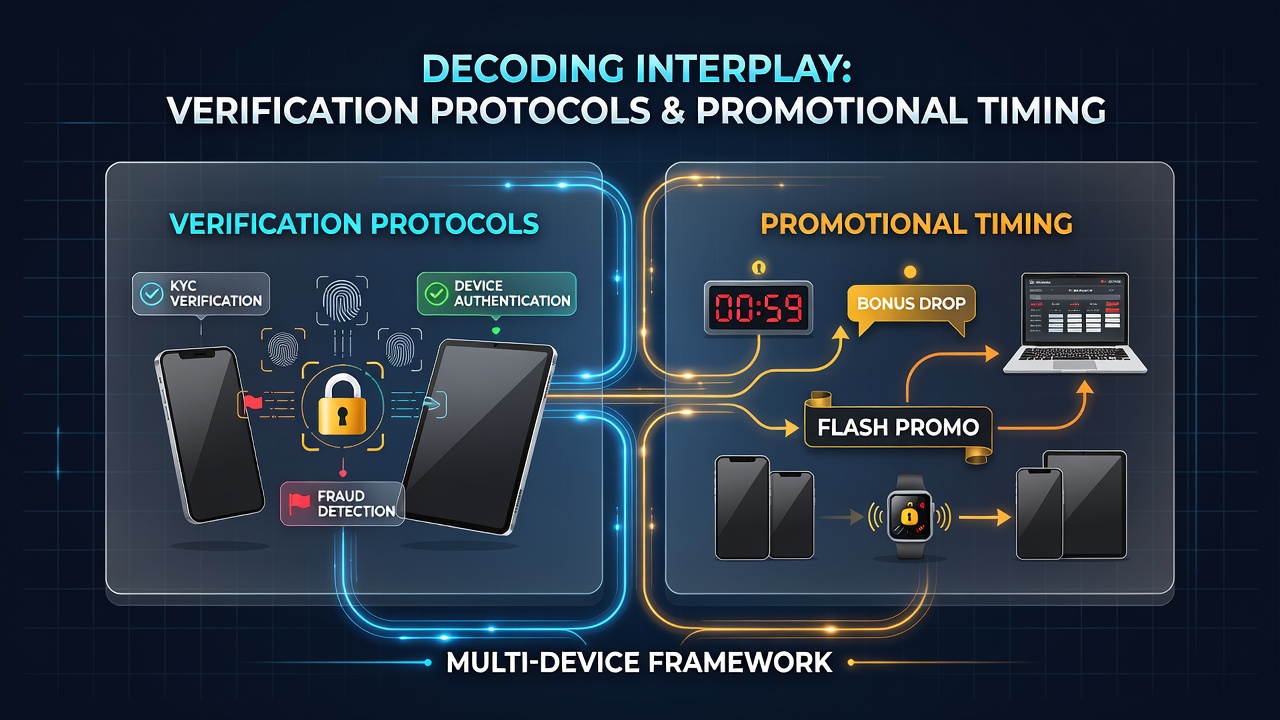
Decoding the Interplay of Verification Protocols and Promotional Timing in Multi-Device Gambling Frameworks
Verification protocols establish the backbone of compliance in gambling systems while promotional timing dictates how and when incentives appear across phones, tablets, and desktop interfaces, and these two elements interact in ways that shape user access and platform operations. Data from regulatory filings shows operators must balance identity checks with offer delivery to maintain both security standards and engagement metrics, especially as users switch between devices during single sessions.
Core Components of Verification Protocols
Verification systems typically include identity confirmation, age validation, and location tracking that activate at account creation or during high-value transactions, and these steps often integrate with device fingerprinting to detect anomalies across platforms. Research from the Nevada Gaming Control Board indicates that streamlined protocols reduce processing times by up to 40 percent when they sync with mobile APIs, yet delays still occur when users move from app-based play to browser sessions without re-authentication.
Promotional Timing Mechanisms
Promotional schedules rely on algorithms that trigger bonuses based on user behavior patterns, deposit history, and device usage data, while timing windows align with peak activity periods such as evenings or weekends. Observers note that campaigns delivered within the first 15 minutes of login show higher redemption rates, and multi-device frameworks allow operators to adjust these windows dynamically as users shift from mobile to desktop without losing offer eligibility.
Interplay in Multi-Device Settings
The interaction between verification and promotions becomes evident when a user completes identity checks on one device only to encounter locked offers on another, and this friction prompts platforms to develop unified session management that carries verification status across environments. Figures from industry reports reveal that synchronized systems cut abandonment rates during promotional redemptions by maintaining continuous authentication tokens, although legacy frameworks still require separate logins that interrupt timing sequences.

Operators have tested hybrid models where initial device verification unlocks time-sensitive bonuses that remain active during device switches, and these approaches draw on real-time data feeds to prevent duplicate claims. In July 2026 several platforms plan to roll out enhanced cross-device ledgers that link verification events directly to promotional calendars, reducing mismatches that previously affected multi-device users.
Regulatory and Technical Considerations
Regulatory bodies across regions require that verification protocols precede any promotional access to prevent unauthorized participation, and this rule influences how timing engines schedule offers after compliance checks complete. A study published by researchers at the University of Nevada gaming.nv.gov/reports examined session data and found that verification delays averaging 90 seconds correlate with lower promotional uptake when offers expire within short windows. Platforms address this by pre-verifying users during low-activity periods and queuing promotions for immediate release once checks pass.
Device-Specific Adjustments
Mobile frameworks often employ lighter verification layers such as biometric prompts while desktop sessions may demand full document uploads, yet promotional timing must remain consistent to avoid perceptions of unequal access. Data shows users on tablets experience the fewest interruptions when protocols and offers align through cloud-based state management, and operators continue refining these alignments to support seamless transitions.
Conclusion
The interplay of verification protocols and promotional timing in multi-device gambling frameworks centers on synchronized data flows that uphold compliance without sacrificing engagement opportunities. As systems evolve toward unified authentication models, the coordination between these elements determines operational efficiency and user retention patterns across the industry.