
Charting Behavioral Analytics Shifts in Tiered Reward Frameworks Across Emerging Digital Slot Networks
Digital slot networks continue to refine their approaches to player engagement through tiered reward systems that draw on behavioral analytics, and emerging platforms have accelerated these adjustments in 2026. Networks track session length, bet frequency, game preferences, and response to bonus triggers to recalibrate reward tiers dynamically. In June 2026 several operators reported updates to their loyalty algorithms that prioritize real-time data streams over static historical profiles, allowing faster shifts between bronze, silver, gold, and platinum levels based on observed activity patterns.
Data Collection Practices in Slot Ecosystems
Operators gather information through integrated player tracking modules that log every spin outcome, deposit amount, and withdrawal timing without requiring manual input from users. Researchers at institutions such as the University of Nevada, Las Vegas have documented how these modules feed into machine learning models that predict churn risk within specific reward brackets. The models assign weighted values to metrics like consecutive daily logins and average wager size, then adjust tier thresholds automatically when aggregate behavior deviates from established baselines. This approach replaces fixed monthly reviews with continuous recalibration cycles that occur every 24 to 48 hours on many platforms.
Regional Variations in Analytics Deployment
European networks operating under the Malta Gaming Authority emphasize compliance-linked analytics that tie reward eligibility to responsible play indicators, while Canadian provincial operators focus on retention metrics tied to provincial tax reporting requirements. Australian platforms, guided by state regulatory frameworks, incorporate harm-minimization flags directly into tier progression rules so that players who exceed pre-set loss limits receive adjusted bonus offers rather than escalated rewards. These differences produce distinct data signatures that analysts compare when benchmarking performance across jurisdictions.
Behavioral shifts become visible when networks expand into new markets or introduce fresh game libraries. One documented case involved a Southeast Asian digital slot network that observed a 34 percent increase in short-session mobile play following a regulatory change in June 2026; the platform responded by lowering the spin volume required to reach the next reward tier for mobile users while maintaining higher thresholds for desktop sessions. Observers note that such targeted adjustments maintain overall engagement levels without uniform rule changes across all device types.
Impact on Player Progression Patterns
Tiered frameworks now incorporate decay functions that reduce points or status when activity drops below personalized thresholds derived from each user's historical data. This replaces the older practice of resetting all accounts on fixed calendar dates. Players who reduce their play frequency after reaching gold status often see their benefits scaled back gradually rather than removed abruptly, a change that data from multiple networks links to lower voluntary churn rates during low-activity periods. The adjustment relies on algorithms that compare an individual's current trajectory against peer groups within the same geographic cohort and device category.
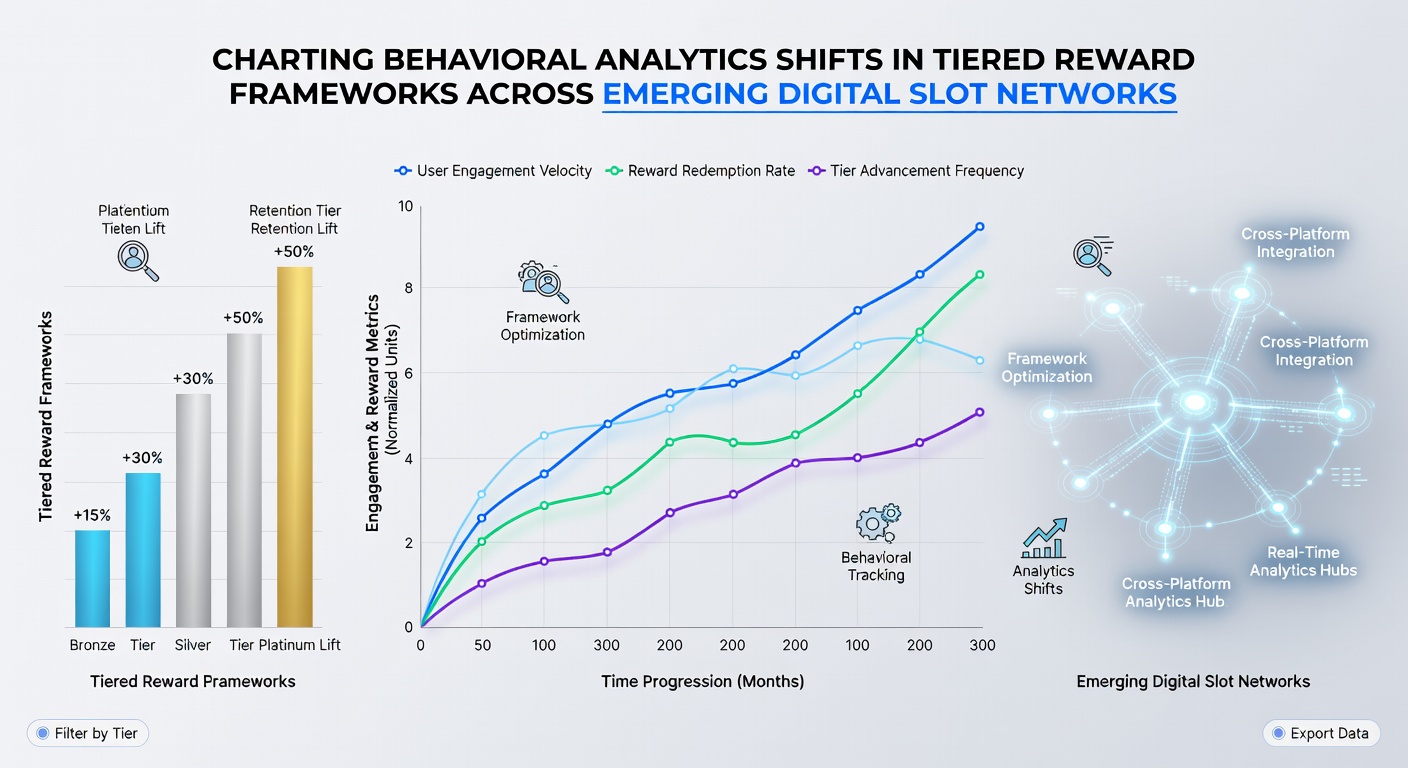
Emerging networks frequently test hybrid models that blend deterministic rules with probabilistic elements drawn from reinforcement learning. A Canadian operator, for instance, introduced a system in early 2026 where gold-tier players receive variable bonus multipliers determined by a model that weighs recent session variance against long-term consistency scores. Figures released by the Canadian Gaming Association indicate that participating accounts showed a measurable uptick in cross-game exploration compared with control groups that retained fixed bonus structures.
Integration With External Data Sources
Some networks supplement internal logs with anonymized third-party datasets that include macroeconomic indicators and regional event calendars. Analysts correlate spikes in local sports events or public holidays with altered deposit timing and game selection, then pre-emptively adjust reward offerings to match anticipated behavior clusters. This external layer remains secondary to core gameplay telemetry yet contributes to more granular segmentation of reward tiers across time zones and cultural contexts.
Technical Infrastructure Supporting Real-Time Shifts
Cloud-based data pipelines process terabytes of slot telemetry daily, routing events through feature stores that serve both analytics dashboards and automated reward engines. Latency requirements have tightened as networks move from daily batch processing to sub-second updates for tier status notifications. Engineers achieve this by maintaining mirrored databases that allow rollback if an algorithmic change produces unexpected migration patterns between reward levels. Security protocols require encryption of behavioral identifiers at rest and in transit, aligning with standards set by various international gaming technology certification bodies.
Case studies from mid-sized platforms reveal that smaller networks achieve comparable sophistication by partnering with specialized analytics vendors rather than building proprietary systems. One vendor's client base expanded by 18 percent between January and June 2026, driven largely by operators seeking to implement tier adjustments without large internal data science teams. The resulting frameworks still differ in granularity, yet share common data schemas that facilitate comparative studies across networks.
Future Trajectories for Analytics-Driven Rewards
Continued growth in digital slot participation across emerging markets will likely sustain investment in behavioral modeling tools. Regulatory bodies in multiple regions have begun requesting summary reports on how reward algorithms respond to identified risk signals, prompting networks to document decision trees and audit trails. These documentation requirements add another layer of structure to the analytics pipeline without altering the fundamental goal of matching rewards to observed activity.
Conclusion
Behavioral analytics have become central to the operation of tiered reward frameworks in digital slot networks, enabling frequent recalibration based on live data rather than periodic manual reviews. Regional regulatory contexts shape the specific metrics that receive priority, while technical infrastructure improvements support faster response times. As networks expand and new markets open, the patterns documented through June 2026 suggest ongoing refinement of these systems to accommodate shifting player behaviors across devices and jurisdictions.