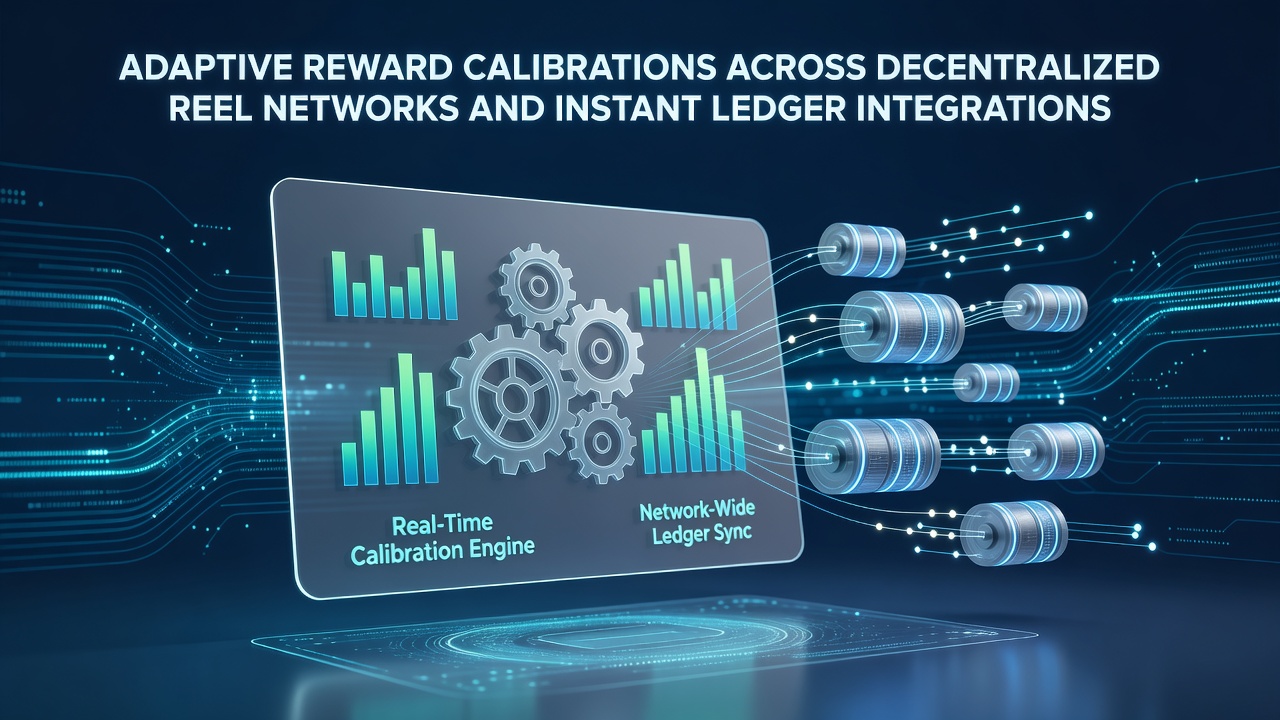
Adaptive Reward Calibrations Across Decentralized Reel Networks and Instant Ledger Integrations
Decentralized reel networks operate through distributed nodes that manage slot-style content delivery and player interactions without central servers controlling every transaction, while adaptive reward calibrations adjust payout structures in real time based on network activity metrics and user engagement patterns. These systems rely on algorithms that monitor variables such as participation rates, reel spin frequencies, and cross-node data flows to modify reward multipliers dynamically.
Core Mechanics of Decentralized Reel Networks
Researchers have documented how these networks distribute processing tasks across multiple validators that reach consensus on reel outcomes and reward allocations, and this setup reduces single points of failure compared to traditional centralized platforms. Nodes communicate through peer-to-peer protocols where each participant maintains a copy of the current reward calibration parameters, allowing updates to propagate across the system without requiring approval from one authority. Studies from academic institutions show that latency in these environments averages under two seconds for most reward adjustments when network load remains moderate.
Instant Ledger Integrations and Their Function
Instant ledger integrations connect these reel networks to blockchain protocols that record every calibration change and reward distribution as immutable entries, enabling verification within milliseconds of each event. The ledgers handle token transfers and audit trails simultaneously, which means operators can confirm that adaptive changes followed predefined rules without delays that occur in batch processing models. Data from the European Blockchain Observatory and Forum indicates transaction finality times have dropped below 500 milliseconds in optimized test environments during 2025 trials.
Calibration Algorithms in Practice
Calibration algorithms process inputs from on-chain sensors that track reel volatility, player retention curves, and node contribution levels before applying scaling factors to base reward tables. One implementation examined by Canadian research groups at the University of Toronto uses reinforcement learning models that update every 60 seconds when certain thresholds in network participation are crossed. These models factor in historical patterns from the previous 24 hours while weighting recent activity more heavily to keep reward distributions aligned with current supply and demand conditions across the network.
Observers note that such calibrations often include safeguards against over-adjustment, such as maximum change limits per cycle that prevent sudden swings exceeding 15 percent in any single reward tier. The process runs continuously, yet periodic audits through the instant ledger allow external parties to review decision trees and confirm compliance with agreed-upon parameters.
Developments Projected Through Mid-2026
Projections for June 2026 suggest increased adoption of hybrid models that combine adaptive calibration with regulatory reporting modules required by several North American and Asian jurisdictions. Network operators have begun testing ledger bridges that feed calibration logs directly into compliance dashboards, which reduces manual reconciliation efforts. Figures from industry reports show pilot programs involving over 50,000 daily active nodes achieving consistent reward accuracy rates above 99.2 percent during stress tests conducted earlier this year.

Additional integrations focus on cross-chain compatibility so that rewards earned on one reel network can transfer to ledgers operating under different consensus mechanisms. This requires standardized data formats that several working groups affiliated with the IEEE Standards Association continue to refine through ongoing specification releases.
Security and Verification Protocols
Security measures in these integrated systems include multi-signature requirements for major calibration overrides and cryptographic proofs that validate each reward adjustment before ledger entry. Nodes must submit zero-knowledge proofs demonstrating that changes adhere to the current algorithm version, which prevents unauthorized modifications from persisting on the distributed record. Research teams tracking these implementations report that attempted exploits have declined in frequency as proof systems mature and validator diversity increases.
Conclusion
Adaptive reward calibrations paired with instant ledger integrations continue to evolve through iterative testing and standards development across multiple regions. The combination allows decentralized reel networks to maintain responsive reward structures while preserving transparent, verifiable transaction histories that support both operational needs and external oversight requirements. As deployment expands through 2026, the technical frameworks established in earlier phases provide the foundation for further refinements in scalability and interoperability.